Search engines rely on web crawlers to discover, understand, and index web pages before they can appear in search results. While many technical SEO factors influence this process, crawl depth plays a significant role in determining how easily search engines can reach your content. A well-structured website helps Googlebot find important pages quickly, while a poorly organized site can delay indexing and reduce visibility. In this guide, we’ll explain what crawl depth is, why it matters, the factors that affect it, and practical ways to improve it for better SEO performance.
What Is Crawl Depth?
Crawl depth refers to the number of clicks it takes for a search engine crawler or a visitor to reach a page from your website’s homepage.
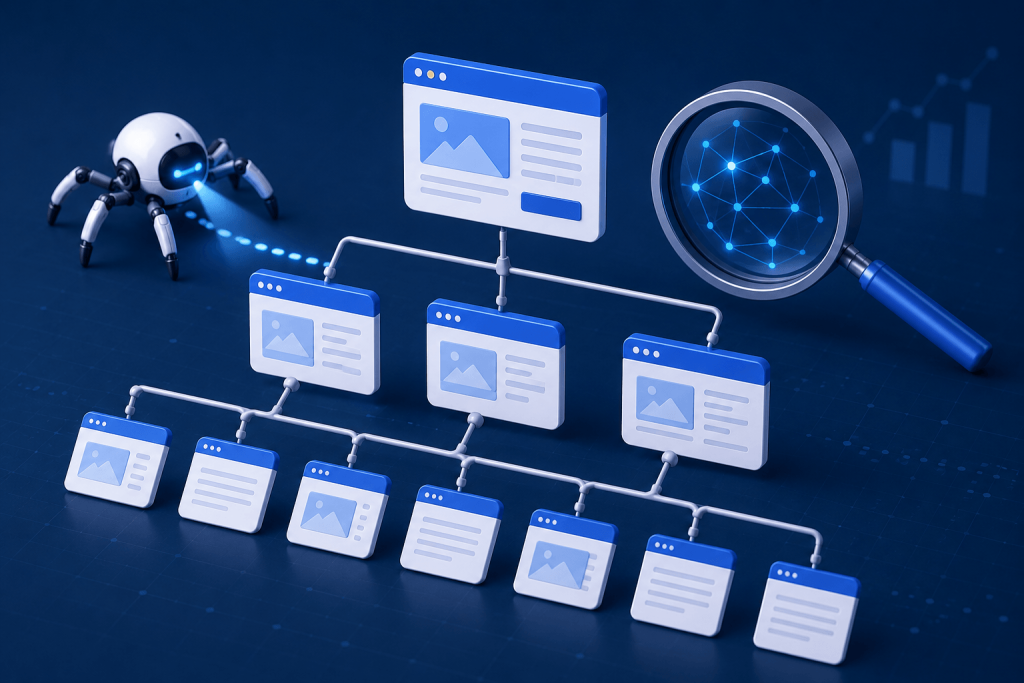
Think of your website as a tree. The homepage sits at the top, category pages branch beneath it, followed by subcategories and individual pages. The deeper a page sits within this structure, the higher its crawl depth.
For example:
- Homepage (Depth 0)
- Category Page (Depth 1)
- Subcategory (Depth 2)
- Blog Post or Product Page (Depth 3)
Pages that require fewer clicks are generally easier for search engines to discover and revisit.
Why Crawl Depth Matters for SEO
A logical website structure benefits both search engines and users. When important pages are located close to the homepage, Google can crawl and index them more efficiently.
Faster Indexing
Google must crawl a page before it can be indexed. Pages buried deep within a website may be crawled less frequently, especially on large websites with thousands of URLs.
Keeping valuable pages within a few clicks of the homepage increases the likelihood that search engines will discover updates sooner.
Better Distribution of Link Equity
Internal links pass authority throughout a website.
Pages located closer to the homepage usually receive more internal link equity because they are linked more frequently. This can strengthen their ability to rank in search results.
A well-planned internal linking strategy helps distribute authority across important pages instead of concentrating it on only a few sections.
Improved User Experience
Visitors should be able to find important information quickly.
If users must click through multiple layers of navigation before reaching useful content, they are more likely to leave the website.
Simple navigation improves engagement while making crawling easier for search engines.
Faster Discovery of Updated Content
Google regularly revisits websites looking for new or updated information.
Pages that are easier to access are often revisited more frequently, helping new content appear in search results sooner.
Common Causes of High Crawl Depth
Many websites unintentionally create structures that make crawling more difficult.
Here are some of the most common reasons.
Complex Website Architecture
Large websites sometimes have too many categories and subcategories.
For example:
Homepage → Category → Subcategory → Child Category → Product
This structure forces search engines to follow numerous links before reaching important pages.
Poor Internal Linking
Internal links connect related pages and guide crawlers through your website.
Without enough internal links, some pages become difficult to discover even if they contain valuable information.
Orphan Pages
Orphan pages have no internal links pointing to them.
Although Google may eventually discover them through sitemaps or backlinks, they are much harder to crawl consistently.
Every important page should receive at least one internal link from another relevant page.
Broken Links
Broken internal links interrupt crawling paths.
Instead of discovering additional pages, search engine bots encounter dead ends that waste crawling resources.
Redirect Chains
Multiple redirects slow crawling and create unnecessary requests.
Instead of:
Page A → Page B → Page C
Use:
Page A → Page C
Reducing redirect chains improves both crawl efficiency and user experience.
Slow Website Performance
Slow-loading pages reduce crawling efficiency.
If Googlebot spends more time loading individual pages, fewer pages may be crawled during each visit.
Optimizing website performance benefits both SEO and visitors.
Duplicate Content
Multiple URLs containing nearly identical content can confuse search engines.
Examples include:
- URL parameters
- Printer-friendly pages
- Session IDs
- Filtered ecommerce pages
Canonical tags and proper redirects help consolidate duplicate content.
Incorrect Noindex Tags
Sometimes important pages accidentally receive a noindex directive.
Although Google may still crawl these pages occasionally, they won’t appear in search results, limiting their visibility.
How to Improve Crawl Depth
Improving your website’s structure doesn’t require a complete redesign. Small technical improvements can make a significant difference.
Build a Clear Website Structure
Organize your content into logical categories.
Every page should belong within a clearly defined hierarchy that both users and search engines can understand.
A simple structure might look like:
Homepage
→ Category
→ Subcategory
→ Article or Product
Avoid creating unnecessary navigation layers.
Strengthen Internal Linking
Internal linking is one of the easiest ways to improve crawl efficiency.
Link related articles together naturally within your content.
Also consider adding:
- Related posts
- Popular articles
- Featured products
- Category links
- Navigation links
These help search engines discover more pages during each crawl.
Keep Important Pages Close to the Homepage
Your highest-value pages should never be buried several clicks deep.
Whenever possible:
- Link important pages from category pages.
- Include key resources in navigation menus.
- Add featured content to the homepage.
The fewer clicks required, the easier the page is to crawl.
Update Your XML Sitemap
An XML sitemap acts as a roadmap for search engines.
It should include:
- Important indexable pages
- Newly published content
- Recently updated URLs
Remove deleted or redirected pages from the sitemap to avoid confusing search engines.
Submitting an updated sitemap through Google Search Console helps Google discover changes more efficiently.
Improve Website Speed
Fast websites allow search engines to crawl more pages within the same amount of time.
Some proven speed improvements include:
- Compressing images
- Enabling browser caching
- Using a CDN
- Reducing JavaScript
- Minifying CSS files
- Optimizing server response times
Performance improvements also enhance the overall user experience.
Fix Broken Links
Regular website audits help identify broken internal links.
Update or remove these links so both users and search engines can continue navigating your website without interruptions.
Eliminate Redirect Chains
Use direct 301 redirects whenever pages move permanently.
Avoid unnecessary redirect hops that waste crawling resources.
Monitor Crawl Errors
Google Search Console provides valuable reports about crawling issues.
Pay attention to:
- 404 errors
- Server errors
- Redirect issues
- Blocked resources
- Soft 404 pages
Fixing these problems improves overall crawl efficiency.
Best Practices for Maintaining Healthy Crawlability
Keeping your website technically healthy reduces the chances of crawl-related issues developing over time.
Recommended practices include:
- Use descriptive URLs.
- Create logical navigation menus.
- Regularly update internal links.
- Remove outdated pages.
- Fix duplicate content.
- Monitor website performance.
- Keep XML sitemaps updated.
- Review crawl reports in Google Search Console.
- Avoid unnecessary URL parameters.
- Ensure important pages remain indexable.
Consistently following these practices helps search engines crawl your website more effectively.
Should You Be Concerned About Crawl Depth?
Not every website needs to obsess over crawl depth.
Small websites with a few hundred pages rarely experience crawling limitations.
However, websites with thousands of pages—such as ecommerce stores, news portals, travel websites, marketplaces, and enterprise sites—benefit greatly from a shallow, organized structure.
If Google struggles to discover new content quickly, reviewing your website architecture should become part of your technical SEO strategy.
Conclusion
Optimizing crawl depth makes it easier for search engines to discover, crawl, and index your most important pages. A clear website hierarchy, strategic internal linking, updated XML sitemaps, faster page speeds, and regular technical maintenance all contribute to better crawl efficiency. By keeping important content accessible within a few clicks of the homepage and eliminating unnecessary obstacles, you create a website that is easier for both users and search engines to navigate, ultimately supporting stronger long-term SEO performance.